
Review: The Journal of Dramaturgy
LMDA’s journal Review: The Journal of Dramaturgy is currently accepting submissions for the 2027 issue. Submissions include:
Articles for peer review
Non-peer-reviewed works (including articles, conversations, performance reviews, provocations, dramaturgical artifacts, and manifestos)
Book review inquiries
The deadline for submissions for publication in the 2027 issue is October 1, 2026.
Review is the peer-reviewed journal of dramaturgy published annually by Literary Managers and Dramaturgs of the Americas. The mission of the journal is to provide a venue for the exploration of dramaturgy and to foster ongoing conversation about the work of the dramaturg and the literary manager and their relationship to all stages of theatre and performance-making. Submissions that explore dramaturgy in contexts beyond performance will also be considered. Review welcomes submissions by all writers regardless of professional affiliation. Inquiries to the editor are welcome in advance of all submissions.
For more information regarding submission details, see https://lmda.org/lmda-review-call-submissions/.
Email any questions to publications@lmda.org.

Teen Entertainment History Symposium
100 Years Strong but Forever 16: Reclaiming and Expanding Teen Entertainment History
April 2-3, 2027
University of Notre Dame
Notre Dame, Indiana USA
Call for Papers
Teen entertainment was first developed in the United States via popular literature during the early twentieth century before gaining further momentum in radio, theatre, film, and comic books during World War II. By the early 1950s, teen-centered entertainment had found its way to American television, further contributing to the commodification of teen culture. The early postwar era saw a rise in teen entertainment in many countries, especially those in Europe, partially due to the United States’ cultural power abroad, along with the financial success of teen-centered entertainment properties and young people’s desire to see themselves represented.
As a result of an increase in transnational media flows during the late twentieth and early twenty-first centuries, teen entertainment is now produced and consumed in virtually every country around the world, helping to shape social constructions of adolescence, young people’s identities and cultural expressions, as well as adults’ engagements with teenagers. Regularly ignored, if not derided, by older audiences interested in more “sophisticated” forms of culture, the teen audience nonetheless continues to be one of the most lucrative markets for entertainment industries worldwide.
Until recently, the history of teen entertainment has been dominated by studies of U.S. films and television shows that feature white, heterosexual, able-bodied, middle-class youth. Minimal attention has been given to other countries, other entertainment media, and other ways of identifying and being a “teen.” Bringing together faculty and student scholars from around the world, this symposium aims not only to expand the field of teen entertainment history but also to honor and promote the research of scholars working to enrich this unique field of study.
Deadline for submissions: 11:59 PM (US Eastern Daylight Time) on Friday, 16 October 2026
Acceptance notifications: mid January 2027
The Program Committee is interested in promoting research on the history of teen entertainment, which we define broadly as popular literature, plays, films, radio programs, television series, comic books, and video games, as well as music, musicians, and other entertainers. Proposals that expand the study of teen entertainment history via attention to non-normative identities, intersectional perspectives, non-Western national frameworks, and/or globalization are especially welcome. Proposals focused on current teen entertainment are welcome but should take a historical perspective.
Proposals for open-call individual papers, preconstituted panels, and preconstituted roundtables are welcome.
Individual open-call paper proposals should include an abstract of 250 words, as well as contact information and a short bio (75-100 words) for all authors. Co-authored papers are welcome. (The Program Committee will assemble panels from accepted paper proposals. Volunteers to act as chairs are welcome.)
Preconstituted panel proposals should include a 250-word panel proposal as well as an abstract (250 words), bio (75-100 words), and contact information for each participant. Each panel should be made up of 3-4 papers (inclusive of the chair and, if applicable, one respondent). Panel co-chairs are welcome, as are paper co-authors and respondents. The chair can serve as the respondent.
Preconstituted roundtable proposals should include a 250-word proposal along with a bio (75-100 words) and contact info for each participant. Each roundtable should have four (4) to six (6) participants, inclusive of the chair and, if applicable, the co-chair.
Follow one of these links to submit your proposal:
- Open-call individual paper proposal - https://forms.gle/bYiJLN2hZiH4f3Fh6
- Preconstituted panel proposal - https://forms.gle/r4V14BzRupyrwc5p6
- Preconstituted roundtable proposal - https://forms.gle/FYAvxvSDoTHUetd49
The Program Committee includes Barbara Jane Brickman, Mary Celeste Kearney, Diana Leon-Boys, Sharon Ross, Timothy Shary, and Frances Smith.
Please direct any questions to Mary Celeste Kearney (mckearney@nd.edu).
JADT Special Issue: Theatre and Activism
Call for Papers
Journal of American Drama and Theatre
Spring 2027
Special Issue:
Theatre and Activism
Submissions due November 1, 2026
The American Theatre and Drama Society welcomes submissions for its Spring 2027 special issue of the Journal of American Drama and Theatre on “Theatre and Activism.”
American theatre has had a varied and complicated relationship to activism and activist movements throughout its history. In the nineteenth century, although some theatrical versions of Uncle Tom’s Cabin advocated for abolition, others reinforced proslavery ideologies. As fascist policies and efforts work to restrict the rights of global majority people, immigrants, refugees, LGBTQIA+ people, women, non-binary people, people with disabilities, and others in the twenty-first century, some theatre artists and audiences view theatre as one method for speaking up and resisting, but these efforts remain in tension with theatre’s continuing participation in systems of oppression and inequity. The special issue invites submissions that consider how theatre participates in movements for change as well as impedes activist efforts for political, social, cultural, and economic reform. In what ways has activism intersected with theatre historically and in our current moment? How do theatre and performance inform activist tactics? In what ways have networks of activists and theatre artists informed theatrical performance and activist movements? What is the relationship between theatrical infrastructures and movements for change? How have activist and social justice objectives informed the formation and productions of professional and amateur theatre companies? How can we attend to the messiness of theatre and activism’s relationship?
The special issue calls for essays that engage with how conceptions of activism have shifted over time and how its diverse meanings have impacted theatre’s intersections with movements for change. It invites explorations of theatre and performance as a site and methodology for activist movements and their opposition. The special issue also welcomes submissions that examine how activism’s relationship to the theatre has impacted theatre and performance historiography.
Membership in ATDS is not required for essay submission, but member submissions are encouraged. Pieces may be full length essays (5000-8000 words), short essays or notes to the field (1000-3000), interviews (up to 5000 words), or roundtables (up to 5000 words). All submissions should be prepared in conformity with the Chicago Manual of Style using manual endnotes and submitted as Microsoft Word attachments. If you are using images, please provide the images and captions with your submission. (Please Note: images should be at least 300dpi and authors are responsible for securing permissions before submission). Please include a short bio with your submission.
Submissions should be received by November 1, 2026. Please direct queries and submissions to guest editor Michelle Granshaw (mkg31@pitt.edu).
ABOUT JADT
Founded in 1989, JADT is a widely acclaimed peer-reviewed journal publishing thoughtful and innovative work by leading scholars on theatre, drama, and performance in the Americas—past and present. The journal’s provocative articles provide valuable insight and information on the heritage of American theatre, as well as its continuing contribution to world literature and the performing arts. JADT is fully online and freely accessible. https://www.thesegalcenter.org/jadt
For more information about ATDS, see http://atds.org. If you are not a member, please consider joining (membership includes a pay-what-you-can option).
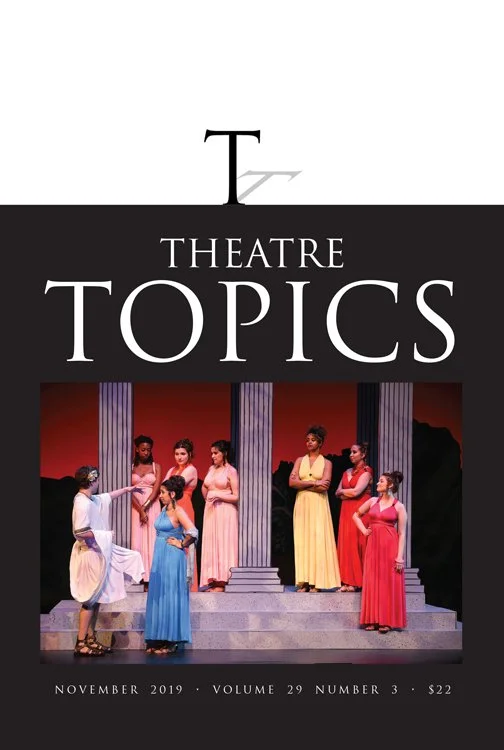
Theatre Topics Online Articles (Rolling Submissions)
ROLLING SUBMISSIONS
From Heather Barfield:
Dear colleagues,
I am currently seeking submissions for the Theatre Topics Online section, for which I serve as Online Editor. If you have an article that is nearing completion—or an idea you would like to develop—I would be glad to consider it. We welcome a wide range of topics and formats.
At this time, I am particularly interested in work that critically interrogates theatre practices and performances through reflexive auto-ethnographic analysis, including approaches informed by affect theory, ritual theory, play, and vulnerability. I also welcome submissions that engage with professional development, especially those emerging from pedagogical exercises, assessment strategies, or classroom-based inquiry.
In addition, I am eager to broaden the scope of what this online platform can showcase. Theatre Topics Online is a space uniquely suited to innovative digital formats, and I encourage contributors to explore the possibilities listed below.
Submission Details
Online Articles
1,000–4,000 words
May connect to a special issue or stand alone, particularly if supported by audiovisual material
Must offer a clear argument supported by evidence and referenced using MLA style
Reviewed by editorial staff rather than through double-blind peer review
Multimedia (video, images, etc.) may be included with proper copyright permissions secured by the author
Innovative digital formats include:
Blog or vlog posts
Video essays
Video interviews or conversations
Video playlists or short documentaries
Teaching resource videos
Interactive or augmented video content
Photo essays
Podcasts
Other multimedia-based explorations of practice or pedagogy
Additional Formats
Notes from the Field (3,000–4,000 words):
First-person accounts of teaching, rehearsal processes, production work, or other aspects of theatre-making.Big Interviews (2,000–3,000 words):
Conversations with notable practitioners, accompanied by images and/or video.My 10 Top Tips (≤1,500 words):
Short, practical contributions offering advice on any relevant facet of theatre practice or instruction.
If you would like to discuss an idea or explore whether your project is a good fit, please feel free to contact me at heather.barfield@austincc.edu
Warm regards,
Heather Barfield
Online Editor, Theatre Topics
Eugene O'Neill Review Special Issue on Acting O'Neill
Eugene O'Neill Review Special Issue on "Acting O’Neill"
Reflecting on her 2001 West End portrayal of Mary Tyrone, Jessica Lange opens the “Foreword” to Long Day’s Journey into Night: Critical Edition by writing: “There are roles that arrive like gifts. Given and received […] Actors can fall in love with characters they play, obsess over them, cling to them . . . sometimes we’re haunted by them.”
Eugene O’Neill’s plays and characters have long been celebrated by actors, even when they pose unconventional challenges or demand extraordinary rigor.
Eugene O’Neill Review is soliciting peer-reviewed articles related to Eugene O’Neill and the practice (or art) of acting for inclusion in EOR 48.2. We invite scholars, performers, directors, and practitioners to reflect on the challenges, discoveries, and enduring appeal of acting O’Neill's work.
Potential contributions might include:
An essay centered on detailing and historicizing those actors known and acclaimed for performing O’Neill plays (Charles Gilpin, Paul Robeson, Jason Robards, Colleen Dewhurst, Jessica Tandy, Jessica Lange, among others)
• The ways actors reimagined the characters of O’Neill’s plays in the spirit of Katie N. Johnson’s Racing the Great White Way
• The role of acting/actors for O’Neill’s plays/characters (traditional actors like James Tyrone or those forced to perform in everyday life like Anna Christie or Willie Oban)
• Casting, especially non-traditional casting for O’Neill plays, as in Geraldine Fitzgerald’s or Robert O’Hara’s off-Broadway productions of Long Day’s Journey into Night.
• New perspectives, reflections, or retrospectives on acting or directing an O’Neill script, whether at the professional level or in an educational setting.
• Or any other novel idea related to O’Neill and performance/acting.
We invite submissions of 5,000-10,000-word articles, which can be submitted to the Editorial Management system for Penn State University Press: https://www.editorialmanager.com/eor/default.aspx.
We also invite proposals for interviews and shorter pieces related to contemporary productions of O’Neill’s work to be featured in the Practitioners' Colloquia.
Information about the Eugene O’Neill Review can be found at https://www.psupress.org/journals/jnls_EOR.html
Deadline: January 1st, 2027.
If you have any questions, email J. Chris Westgate at eugeneoneillrevieweditor@gmail.com

CfP: Football and Performance
CFP: Football and Performance
Editors: Eero Laine, Noe Montez, and Shannon Walsh
We are currently seeking chapter abstracts for an edited volume on football and performance. Theatre and performance studies allow us a unique view towards the ways that sports extend into civic space, politics, and daily life. How can the disciplines of theatre, dance, and performance studies serve as an analytic for sport, generally, and American football, in particular?
This project traces the theatricality of football across a variety of sectors ranging from the game itself to performance spaces, labor, fandom, and spectacle within and around the game. We are also interested in scholarship drawing from theatre, dance, and performance scholarship to explore how football engages with the complexities of race, gender, queerness, class, colonialism, globalism, and other political, social, and cultural discourses.
Strong proposals will engage with key theories, terms, and ideas from theatre and performance studies, advancing conversations in the field while offering dramaturgical insights into football as performance. We are interested in the intersections of theatre and performance with football across the range of its play: youth football, college football, professional football, and/or flag football. Contributors are encouraged to think structurally and comparatively across multiple teams, games, plays, or other particular case studies and examples.
Potential contributions might address:
The dramatic structures of football gameplay, seasons, championships;
The ways that rules are configured for theatricality / entertaining play (e.g., the tuck rule, changes to kickoff rules to increase returns, etc.;
The aesthetics, language, and conventions of the game itself (e.g., beautiful plays, “color commentary,” endzone celebrations, etc.);
Football fashion, jewelry, hair, and style;
The theatricality of box seating and celebrity;
Halftime shows, sideline entertainments, and other performing arts related to the football event;
The stadium as stage (lighting, scenography, costuming, props, etc.);
Stadiums and the space around them as places of performance and/or commerce—from campus geography to entertainment districts;
The global circulation of football;
Overlapping training between football and the performing arts;
Characterizations of teams, fans, players, and their geographic regions;
Shared technical and design equipment between football and theatre;
Football in relation to live event tourism and mega-events;
Audience and fan experience and engagement;
Fantasy Football and sports betting and other forms of performance speculation.
Please send a title, 250-word abstract, and short bio to noe.montez@gmail.com, eero.email@gmail.com, shannonmlwalsh@gmail.com by September 1. Please note, if your contribution is accepted, the anticipated final word count for your chapter will be 6,000 to 7,500 words, including works cited and any footnotes. We will look to secure an advance contract with a press in the fall of 2026 and expect that initial drafts of chapters will be due by the first half of 2027.
Theatre and Performance Notes and Counternotes (Rolling Submissions)
Dear friends and colleagues,
(I apologize for any cross-posting. Also, please feel free to distribute this CFP widely.)
Theatre and Performance Notes and Counternotes (TPNC) is currently seeking articles, of any sort (i.e., research articles, discussion articles, response articles and/or Symposia [see below for descriptions]), for TPNC 4.1 (2027) and beyond. TPNC accepts articles via rolling submissions.
Theatre and Performance Notes and Counternotes is the first and only journal in the broadly conceived field of theatre studies to publish short-to-medium length research articles on any subject, as well as publish discussion and response articles. As such,TPNC is an ambitious journal that provides the field with a uniquely responsive and organic forum, encouraging and yielding more immediate and direct scholarly exchanges. Placing a premium on clarity, readability, and rigor of thought, TPNC seeks articles that despite their brevity are significant and have wide appeal and applicability in the field. Finally, TPNC welcomes interdisciplinary articles that reach across and/or beyond the field(s) of drama, theatre, and performance studies.
TPNC 1 (2024):
Volume 1 Issue 1 | Theatre and Performance Notes and Counternotes | Scholarly Publishing Collective
Volume 1 Issue 2 | Theatre and Performance Notes and Counternotes | Scholarly Publishing Collective
TPNC 2 (2025):
Volume 2 Issue 1 | Theatre and Performance Notes and Counternotes | Scholarly Publishing Collective
Volume 2 Issue 2 | Theatre and Performance Notes and Counternotes | Scholarly Publishing Collective
TPNC 3 (2026):
3.1 -- currently in production (with a special section on Theatre and 9/11 at 25)
3.2 -- close to entering production (our first Special Issue [on The United States and American Theatre at 250], guest edited by Harvey Young)
To submit an article to Theatre and Performance Notes and Counternotes (TPNC), please visit Editorial Manager (https://www.editorialmanager.com/tpnc). The online system will guide you through the steps to upload your article to the editorial office. Except in response or discussion articles in which the identity of the author is appropriate and/or required, in order to undergo the journal’s double-blind peer-review process, all articles should (1) be anonymized, (2) be between 1,500-4,000 words, and (3) conform to the latest edition of The Chicago Manual of Style.
Research articles
Original research articles can range from focused notes to medium-length articles. Articles can be on any subject(s) in the broadly-defined field of theatre studies, but the scope, ambition, and thesis should be appropriate to the length of the submitted article.
Discussions
Discussion articles can offer proposed solutions and/or problematize specific ideas related to, or emerging from, conversations or debates within the field. Discussions can also serve as a place to crystalize conversations or debates in the field, or to bring seemingly-disparate ideas into a more coherent conversation.
Responses
Response articles are, most often, directed at either the theses of a specific scholar(s) and/or a specific conversation or debate within the field. Often, responses engage directly with the strengths and weaknesses of particular theses or broader ideas in the field in order to either strengthen, modify, or challenge these theses/ideas. The aim of these responses is not to create debates or arguments (and, certainly, never arguments or attacks of a personal nature) but to move the field to a clearer and more accurate understanding of the subject at hand. These response articles can also provide a space to revisit and/or modify one’s own previously-published ideas.
Symposia
Finally, if you would like to discuss the possibility of proposing and/or curating a “Symposium” consisting of 3-5 related research, discussion, and/or response articles, please send an email to the Editor of Theatre and Performance Notes and Counternotes, Prof. Michael Y. Bennettbennettm@uww.edu.
(We are also now considering proposals for Special Issues. If you have an idea for a Special Issue and would like to guest edit or guest co-edit it, please email the Editor, Michael Y. Bennett, as above.)
Thank you,
Michael
Dr. Michael Y. Bennett
Professor of English
Affiliated Faculty in Theatre
Affiliated Faculty in Philosophy
University of Wisconsin-Whitewater
Life Member and Visiting Fellow (’22)
Clare Hall, University of Cambridge
President, The Edward Albee Society
Editor, Theatre and Performance Notes and Counternotes
Editor, Routledge Studies on Edward Albee and American Theatre
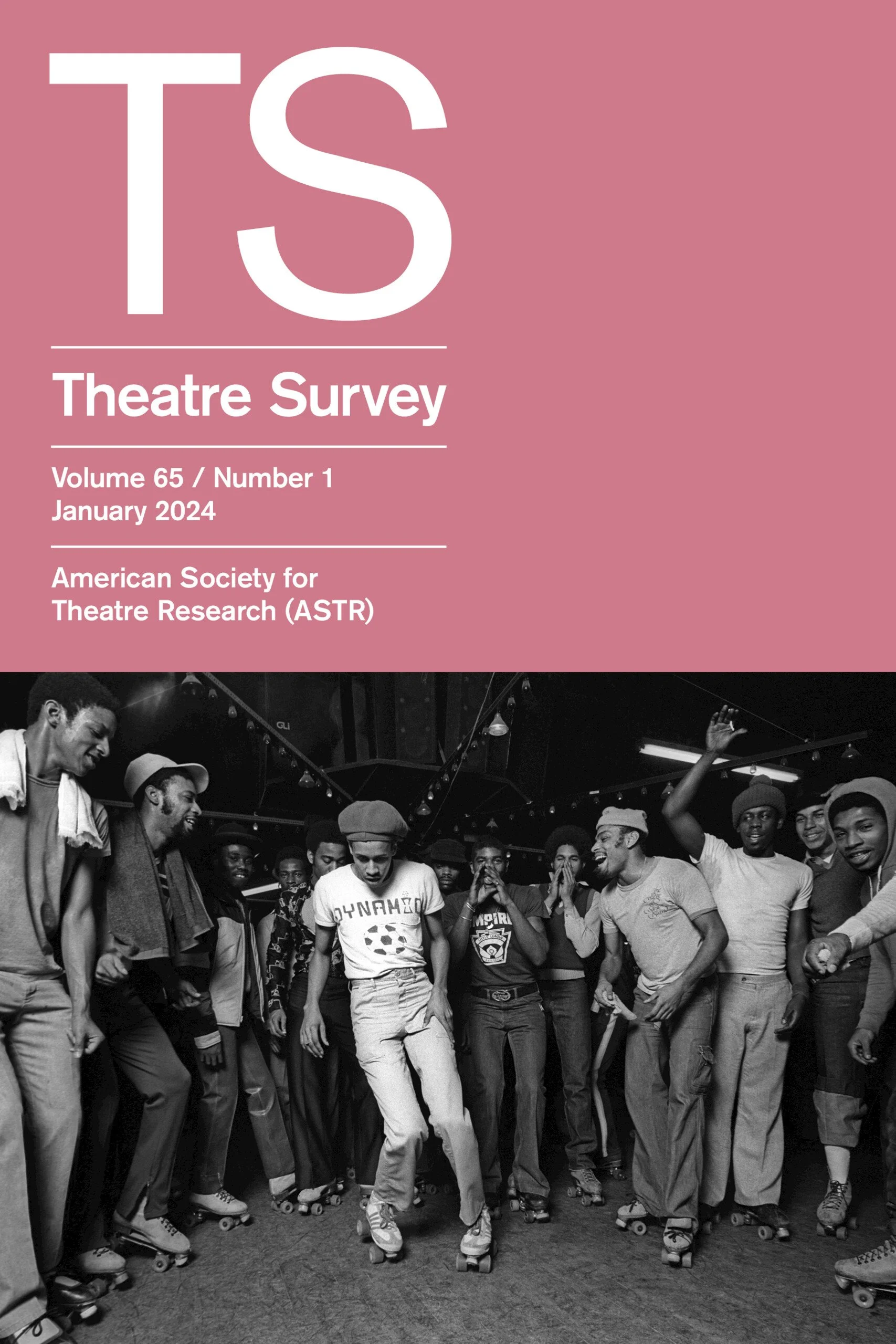
Theatre Survey: “Genealogies & Performance”
Call for Papers:
“Genealogies & Performance”
Due by September 1, 2026, to be published as a special issue (69.1) of Theatre Survey in
January 2028.
This special issue will explore the limits and potentials of a genealogical approach in theatre and performance historiography, inviting scholars to reflect on “genealogy” as a methodology and to consider the genealogies of their own critical approaches. It fosters conversations between models of theatre history that prevailed in the field at the turn of the millennium and contemporary methodological orientations that expand, perturb, and critique these historiographic methods.
In the last three decades of theatre and performance scholarship, the Foucauldian concept of “genealogy” has generated modes of theorizing history that challenge power structures, teleological paradigms, and ostensibly ahistorical concepts. Beginning with works by Shannon Jackson and Joseph Roach, and continuing into more recent scholarship by Uri McMillan and Amelia Jones, among others, “genealogy” tends to be used by scholars interested in historiographic methods that cross borders of time, geography, discipline, and genre to find new associations. Its use has proved especially effective for scholars working to recover the voices of historically marginalized people and place them in an expanded field of historical discourse and connection. “Genealogy” has now become so ubiquitous in our field that its deployment typically no longer requires citation or definition. The term has perhaps even begun to take on the kind of ahistorical pose that Foucault sought to disrupt through a genealogical mode of historiography.
Submissions might address:
What are the limits of critical genealogical approaches and what methodological interventions might they foreclose?
What unexplored potentials or affordances might genealogy still hold for the field of theatre and performance studies?
What other terminologies or methodologies have become so ubiquitous in our field as to appear ahistorical, and what systems might tracing their genealogies disrupt?
What are some genealogies of genealogy itself? How has the term developed, transformed, and been contested over the years since Nietzsche and later Foucault popularized it in the critical lexicon.
This special issue will be edited by Debra Caplan, Kellen Hoxworth, and Elliott Turley. We welcome essays of 4,000 to 6,000 words focused on sustained methodological reflections.
Essays may briefly describe case studies pertinent to the project but should emphasize targeted interventions relating to genealogy and historiographic methodology.
The CFP is available online: https://muse.jhu.edu/issue/56992/information/calls.pdf. For more information about submission, visit:https://www.astr.org/page/TS_Submission_Guide.
Authors should submit via ScholarOne (https://mc.manuscriptcentral.com/theatresurvey) by September 1, 2026.
If this deadline is not possible due to extenuating circumstances, please contact Debra Caplan to inquire about a possible extension. She welcomes questions and inquiries at debra.caplan@baruch.cuny.edu.
Bloomsbury Series: Cultural Histories of Theatre and Performance
CALL FOR PROPOSALS
Cultural Histories of Theatre and Performance
Inviting authors to submit proposals for monographs or edited collections about theatre histories in global and local contexts.
Series Editors:
Professor Claire Cochrane, Emeritus, University of Worcester, UK
Professor Anita Gonzalez, Georgetown University, USA
Cultural Histories of Theatre and Performance recognises that historical knowledge has always been contested and revised. Since the turn of the 21st century, the transformation of conventional understandings of culture created through new political realities and communication technologies together with paradigm shifts in anthropology, psychology and other cognate fields have challenged established methodologies and ways of thinking about how we do history.
We welcome proposals for books that take on those challenges while enlarging notions of theatre and performance through the representation of the lived experience of past performance makers and spectators. Our aim is to be both inclusive and expansive, inviting authors to propose topics that range temporally and spatially from the locally-specific to the intercultural and transnational.
To discuss or submit a proposal for the series, contact:
claire.cochrane@emeritus.worc.ac.uk

ATDS 2026 Graduate Student Postconference Series: Demystifying the Journal Publication Process (virtual)
The ATDS 2026 Graduate Student Postconference Series aims to demystify the journal publication process for graduate students and early career scholars. Through a combination of synchronous and asynchronous panels, events, and mentoring sessions, the postconference addresses questions including: How do you approach transforming a seminar paper into an essay ready for peer-review? How do you figure out what journal to submit your work to? What are the steps of the journal publication process? How might you respond to peer reviews? Attendees will have an opportunity to discuss questions and anxieties about the publication process with editors, faculty mentors, and peers.
The series also includes a roundtable for graduate students to discuss key issues impacting them in the field today.
To attend the postconference, please use this Google Form to sign up by July 28 to receive the Zoom link. The Zoom link will be sent out two days before the event.
Please reach out to Michelle Granshaw (president@atds.org) with any questions.
ATDS 2026 Graduate Postconference Series Committee: Natasha Cole, Michelle Granshaw, Mina Kawahara, and Bess Rowen.
Program
12PM-1:15PM ET – Demystifying the Journal Publication Process Editor Roundtable
(All faculty, students, and independent scholars are welcome to attend)
David Bisaha (Associate Editor, Theatre Annual), Benjamin Gillespie (Editor, Journal of American Drama and Theatre), Bess Rowen (Editor, Journal of American Drama and Theatre), and Jonathan Shandell (Editor, Theatre Annual)
1:30PM-2:45PM ET – Navigating Graduate School Today: A Roundtable
(All faculty, students, and independent scholars are welcome to attend)
What are the central issues facing graduate students now? What do you want to see changed? How might the field meet this moment? This roundtable will provide a chance to come together to hear directly from graduate students, discuss strategies, and think collectively about how to support graduate students as they navigate the challenges of graduate school today. DEADLINE EXTENDED - Please see the call for graduate student presenters below.
3PM-4PM ET – Graduate Student Mixer
(Graduate Students Only)
An informal mixer for graduate students to meet other grad students, talk about their research interests, discuss journal publication, share success stories and advice, and commiserate about challenges of graduate school.
Journal Article Works-in-Progress Mentoring Sessions
Graduate student authors will be matched with a faculty mentor who will provide written and/or verbal feedback on a full-length essay. This will be an asynchronous process that is designed to be flexible and low-pressure for all involved. ATDS hopes that this will be an opportunity to not only provide graduate student authors a fresh set of eyes on their writing, but also a look into how editors and peer reviewers might approach their work. Deadline passed.
Call for Participants for Navigating Graduate School: A Roundtable
This roundtable welcomes graduate student participants interested in discussing key challenges and opportunities facing graduate students in the field. What are the central issues you see facing graduate students now? What do you want to see changed? How might the field meet this moment? The roundtable will provide a chance to come together to hear directly from graduate students, discuss strategies, and think collectively about how to support graduate students as they navigate the challenges of graduate school today.
We welcome submissions from graduate students at various points in their careers. We want to hear about what topics matter to you! Graduate student presenters will speak for 5-7 minutes before the conversation is opened up to the group. If you are interested in serving as a roundtable participant, please fill out this Google Form by July 15.
Call for Editors: Journal of Dramatic Theory and Criticism
The Journal of Dramatic Theory and Criticism (JDTC), published twice a year, is seeking an Associate Editor. The Associate Editor will take over as Editor in January 2028, serving a term of three years.
The Associate Editor will edit a special section of the journal for the Fall 2027 issue on a topic of their choosing. Special sections range in size from a few articles to the bulk of an issue. The Associate Editor will also shadow the publication process with the current Editor, Aaron C. Thomas, in selecting submissions for peer reviewers, fielding reviewers’ comments to authors, copyediting, proofing, seeing essays through to publishable articles, and all other phases of publication. In short, the Associate Editor will have access to and be invited to take part in all aspects of the editorial process before they take on full duties in January 2028.
To apply for this position, please send a current CV and a cover letter detailing interest, relevant experience, and a brief description for at least one special section no later than July 1, 2026, to jdtc@ku.edu.
The Journal of Dramatic Theory and Criticism is also seeking a new Book Review Editor. The Book Review Editor reports to the Editor and will be responsible for regularly curating and producing a section of each issue of the journal dedicated to book reviews. Responsibilities include commissioning reviews of books relating to dramatic theory and criticism, editing reviews for publication in the fall and spring issues of the JDTC, communicating regularly with the JDTC Editor and Managing Editor, and maintaining communication and relationships with book publishers. Applications are due July 1, 2026.
To apply for this position, please send a current CV, a cover letter detailing interest, relevant experience, and contact information to jdtc@ku.edu. If your institution might provide any support for your work in this position, please note that in the cover letter. Finally, please also provide a list of ten recently published books you would like to see reviewed in the Journal of Dramatic Theory and Criticism.
Questions about either position may be directed to Aaron C. Thomas, Editor, Journal of Dramatic Theory and Criticism(acthomas@fsu.edu) and/or Tiffani Brooks Hagan, Managing Editor (jdtc@ku.edu)
The Journal of Dramatic Theory and Criticism was founded at the University of Kansas in 1986 to provide a forum for innovative theoretical approaches to dramatic criticism and theatre studies. The journal has expanded its purview—and its readership—over the decades to reflect the changing fields of theatre and performance studies. Our internationally recognized publications overlap with performance studies, historiography, and cultural studies with a global reach. Our articles incorporate interdisciplinary research that in recent issues includes explorations into critical race theory, queer studies, aesthetics, international performance forms, and spectatorship, drawing on areas that range from philosophy to arts-based research. More information is available at https://theatredance.ku.edu/about-jdtc. Archived copies of the journal may be accessed through Project MUSE, and at https://journals.ku.edu/jdtc/issue/archive.

ATDS Contingent Faculty Travel/Research Award Nominations
Deadline to Apply: June 1, 2026
The ongoing challenges of the academic job market mean that many faculty have positions that do not allow them access to regular university funding for research or conference travel. As an organization, the American Theatre and Drama Society is committed to supporting contingent faculty members (i.e., adjunct faculty or part-time faculty as defined by your institution; teaching staff) in their on-going and future work. For this reason, ATDS sponsors a grant for contingent faculty. This grant is meant to help with either Option 1) Conference Travel, OR Option 2) Travel for Academic Research in the field of theatre, drama, and performance of the Americas at a location not in the candidate’s immediate geographic area.
Eligibility: Contingent faculty whose positions render them ineligible for institutional research or travel support.
Award Amount: $500.00 and One-Year Membership to ATDS
Your application should include:
Option 1: Conference Travel Support
1. CV
2. A two-page (maximum), double-spaced proposal detailing your research project and the conference you plan to attend to present your research (please include the name of the conference, dates, and relevant travel details). Also, it is possible for an application to address a combination of needs (e.g., to attend a conference at a site where you will also conduct research).
Option 2: Travel for Academic Research
1. CV.
2. A two-age (maximum), double-spaced proposal with an explanation of the nature and significance of the project, the intended use of archive or scope of the ethnographic study, the intended use of the funding and when (with budget), and the expected outcome (monograph, conference presentation, article submission, edited volume, performance text, or other creative work, etc.).
Preference will be given to proposals that best reflect ATDS’s mission to advance the study of American theatre and drama (broadly defined), its varied histories, traditions, literatures, and performances within its cultural contexts. ATDS also encourages the evolving debate exploring national identities and experiences through research, pedagogy, and practice.
Please submit applications via email to committee chair Noe Montez at noe.montez@emory.edu with the subject line “ATDS Contingent Faculty Award Proposal.” Awardees will be notified by June 1, 2026.
2026 Selection Committee: Noe Montez (chair, Emory University), Lindsey R. Barr (American University), and Jessica Friedman (San Diego State University)
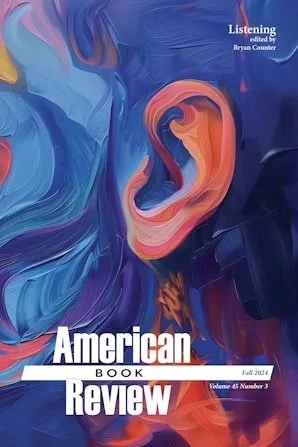
CfP: Drama and Resistance
Guest editor Nicole Rizzo is seeking contributions for a collection on “Drama and Resistance” within the postmodern/post-World War II era for the literary journal American Book Review. The topic is inclusive of contemporary American drama.
The collection will include 8-10 short essays and book reviews on this topic that are roughly 1,500 words each (or 6/7 pages double-spaced). Short 100-word abstracts should be sent to nrizzo@iu.edu by June 1st.
“Staying Put,” a special issue of Theatre Journal (online section)
Theatre Journal Special Issue for December 2026
For this special issue on “Staying Put,” Theatre Journal invites submissions that engage with “staying put” as a conceptual framework and/or as a foundational aspect of theatre, dance, and performance studies scholarship. This theme is inspired by the resilience performance groups have historically exhibited—and continue to exhibit—in response to challenges such as the pressures of the COVID-19 pandemic, rising rents, lack of funding, and political instability. Many practitioners and companies have resisted displacement, remaining in the spaces where they cultivate their craft, generate new artistic possibilities, and engage with their communities. A notable example is Su Teatro in Denver, Colorado. By mobilizing community support, in 2024 the Latine theatre company successfully paid off its mortgage and even expanded its space in the face of rapid gentrification. In cases such as this, the act of staying put not only ensures the continued presence of the embodied arts in a given locality but also asserts social and cultural significance. Given the increasing presence of conservative discourses across the globe, that any company or artistic collective chooses to stay put is a political and radical act. By choosing to remain, preserving physical and artistic footholds, groups and practitioners reinforce the vital role of the arts in the community.
At the same time, “staying put” invites expansive interpretation, encompassing both durational and ephemeral interventions as strategies of resistance and refusal. Protest actions such as sit-ins, die-ins, and teach-ins exemplify how physical presence can operate as a performative tactic— disrupting dominant narratives and drawing attention to urgent sociopolitical issues. Beyond overt protest, performance artists, dancers, and theatremakers have long explored the concept of staying put through site-specific works, endurance-based practices, and installations that reclaim or reimagine contested spaces. Performances foregrounding slowness, stillness, or repetition often function as aesthetic and political acts of persistence, challenging systems that valorize mobility, speed, and displacement.
“Staying put” also evokes ideas of rootedness or plantedness, inviting reflection on nonhuman agents and their relationship to place and acts of resistance. Additionally, archival and dramaturgical interventions, along with performance practices grounded in ghostly or reenactment-based encounters, offer alternative ways of “staying put”—resurrecting marginalized histories, reclaiming cultural memory, and insisting on the presence of voices that institutions or dominant discourses have attempted to erase. Ultimately, “staying put” invites us to consider what it means to perform remains: to examine the who, what, and where of remaining.
Overarching questions of this special issue include: How does the act of “staying put” function as a form of artistic and political resistance in the face of displacement, gentrification, or systemic oppression? In what ways does “staying put” challenge dominant notions of time, movement, and progress in theatre, dance, and performance? How do theatre, dance, and performance groups sustain themselves in contested or precarious spaces?
This special issue will be edited by Theatre Journal Coeditor Christina Baker. We will consider both full-length essays for the print edition (6,000-9,000 words) as well as proposals for short provocations, video and/or photo essays, and other creative, multimedia material for our online platform (500-2,000 words). For information about submission, visit: https://jhuptheatre.org/theatre-journal/author-guidelines.
Article submissions (6,000-9,000 words) should reach us by February 1, 2026. If this deadline is not possible for you due to extenuating circumstances, please contact Christina Baker to inquire about a possible extension. She welcomes questions and inquiries at christina.baker0001@temple.edu.
The deadline for submissions to the online platform (500-2,000 words) is June 1, 2026. Online Editor Tarryn Chun welcomes questions and inquiries regarding submissions to the online platform at tchun@nd.edu.
Submit via ScholarOne: https://mc.manuscriptcentral.com/theatrejournal.
ATDS First Book Bootcamp
APPLY TO PARTICIPATE IN THE 2026 FIRST BOOK BOOTCAMP:
Can you write your first book? Yes, you can!
The annual First Book Bootcamp pairs contingent and tenure-stream faculty with experienced faculty mentors to develop book proposals. Mentoring faculty will read participants’ materials in advance and meet during the Bootcamp in one-on-one sessions for targeted feedback.
In addition to these one-on-one mentoring sessions, the First Book Bootcamp includes workshops on the book proposal process, panels with series and acquisition editors and recent first-time authors, open writing sessions, and peer conversations. After the two-week Bootcamp, participants will attend a virtual reunion to update mentors on their progress, solicit advice, and sustain this supportive community of scholars.
Eligibility
Anyone working on a research monograph in the fields of theatre or performance studies broadly defined is eligible to apply. The First Book Bootcamp is NOT intended for those still completing their PhDs (we hope you will apply in the future!).
Schedule
The Bootcamp will run via Zoom from July 28-August 7, with multiple group gatherings and one-on-one sessions. Participants will be selected and will be assigned to a mentor by June 20. Participants must submit their materials (sample chapter, draft book proposal, etc.) to mentors no later than July 1. Accepted participants are expected to attend all scheduled sessions.
At the conclusion of the bootcamp, participants will have engaged in a minimum of 10 hours of intensive mentorship, workshopping of their research materials, and conversations with professionals in the field.
Application
To apply, fill out this google form: https://forms.gle/EvXmGN68Zf9HvwKp9
Applications include your project title, 150-word abstract, status of your project, goals for the First Book Bootcamp as well as your CV and contact information and are due June 1. Please email convenors Michael Y. Bennett, Jennifer Buckley, and Heather S. Nathans: atdsfirstbookbootcamp@gmail.com.
Modern Drama: Special Issue on Albee, WAVW
From Michael Bennett:
Dear colleagues/friends,
(Please forgive the cross-posting and feel free to distribute this CFP.)
I am guest editing a Special Issue of Modern Drama on Edward Albee's Who's Afraid of Virginia Woolf? to mark Albee's Centenary celebration in 2028. Entitled "New Ways of Looking at Who's Afraid of Virginia Woolf?, in Honor of the Edward Albee Centenary," this special issue of Modern Drama is planned for Summer 2028. I believe that the title of the special issue is more than self-explanatory.
While final essays of 6-9k words will not be due until May 2027, I kindly ask potential contributors to email me an abstract of up to 250 words at bennettm@uww.edu by June 1, 2026. You may also feel free to email me to informally discuss a potential idea for an article for the special issue.
Thanks and take care,
Michael
Michael Y. Bennett, Ph.D.
Professor of English
Affiliated Faculty in Theatre
Affiliated Faculty in Philosophy
University of Wisconsin-Whitewater
Life Member and Visiting Fellow (’22)
Clare Hall, University of Cambridge
President, The Edward Albee Society
Editor, Theatre and Performance Notes and Counternotes
Editor, Routledge Studies on Edward Albee and American Theatre
ATDS Emerging Scholars Award Nominations
Emerging Scholars Award
Due Date: May 31, 2026
The American Theatre and Drama Society (ATDS), in coordination with Disability, Theatre, and Performance (DTaP), is pleased to announce “Activating Imagination in/and Community: Emerging Scholars in ATDS and DTaP,” a panel at the ATHE 2026 conference. Papers submitted may treat any aspect of theatre, performance, and drama of the Americas, its varied histories, traditions, literatures, and performances within its cultural contexts. We also welcome papers by scholar-artists who integrate performance as research. While all submissions are encouraged, we particularly recommend submitting papers that reflect ATHE’s 2026 conference theme of “activating imagination in/and community.” For a full description of this year’s theme, visit the website at this link. See ATDS’s ATHE CFP link here.
Papers should be 8-10 pages long, double spaced.
Please note: This panel introduces new scholarship on American theatre and drama and Disability, Theatre, and Performance from emerging (graduate student) scholars. The DTaP focus group will also issue calls for emerging scholars for participation in this jointly coordinated panel. Our panel will feature four emerging scholar papers, selected by the members of the ATDS and DTaP focus groups. Papers submitted through ATDS do not necessarily need to engage directly with disability studies. However, the idea is that the work brought together in the co-sponsored panel will be deepened by an engagement with other DTaP focused papers that are centered on this topic. The four selected scholars will present their papers, followed by a short period of questions and answers from the attendees. Submissions are welcome from any scholar currently enrolled in a graduate program who has not previously presented at ATHE.
Award recipients for the ATDS Emerging Scholar panel in 2026 will receive constructive feedback from the committee, geared towards the panel presentation. The top two papers will be invited to revise and publish their conference papers in the 2027 issue of Theatre Annual. The winners of the ATDS Emerging Scholar Award will also receive a free one-year membership to ATDS and a check for $150.
Members of the ATDS Emerging Scholar committee include: Nick Fesette (chair), Jade Power-Sotomayor, and Maria De Simone.
To apply, fill out this short Google form and upload your proposed conference paper (8-10 pages, double-spaced) by May 1, 2026. Questions and concerns may be sent to Nick Fesette (nicholas.fesette@emory.edu) via email.
"Institutionality," a special issue of Theatre Journal (online section)
Theatre Journal Special Issue for September 2026
In her introduction to a special section in a 2002 issue of Dance Chronicle, Sally Banes called for attention to an emerging subfield in dance studies that she dubbed “critical institutional studies.”[1] Distinct from what were established discourses of institutional critique in art history and visual and media studies, critical institutional studies would align more directly with critical museum studies, new materialisms, and Marxist criticism in its focus on material structures of support for dance creation, presentation, and reception. Since Banes’s 2002 call, predominant strands of “critical institutional studies” have emerged in relation to theatre, dance, and performance studies. These include scholarship in critical university studies that is more broadly concerned with how the arts function (or don’t) in “the” university[2] as well as more discipline specific investigation into what Sarah Wilbur calls an “infrastructural approach” investigating “cultures of support,” such as Hillary Miller’s 2016 book Drop Dead: Performance in Crisis, 1970s New York. [3] We could also consider recent works like Lisa Biggs’s The Healing Stage: Black Women, Incarceration, and the Art of Transformation (2022) and her analysis of the prison as an institution under the umbrella of critical institutional studies. Administrative and editorial labor are also matters of critical institutional studies, as Olive Demar makes clear in her incisive introduction to a recent special issue of Dance Chronicle on “critical institutional research.”[4]
Another angle on critical institutional studies, that of “institutionality,” “suggests that institutional characteristics can be regarded as a general condition of modern societies.”[5] Analyses of institutionality, the editors of a 2022 volume in political theory and ethnography claim, attend to the “heterogeneous, dynamic, and contingent” qualities of institutions and their histories, qualities that also might characterize the work of theatre, dance, and performance studies.[6] For this special issue on “Institutionality,” Theatre Journal invites submissions that consider “institutionality” as a keyword for histories and theories of performance across temporalities and geographies.
Submissions might address:
Precarities of state institutional support for theatre, dance, and performance underhistorical, ongoing, and increasing authoritarianism
Counter- or anti-institutional performance formations
Institution-building efforts and their commitments to and refutations of culturalimperialism, colonialism, and white supremacy
Figures, collectives, and performance works that advance institutional critiques (of arts presenting spaces but also of institutional spaces like schools, hospitals, parks, and prisons)
Limits and affordances of institutionality for performance cultures, practices, and values often considered peripheral to the political economic work of institutions in modernity.
This special issue will be edited by Theatre Journal Editor Ariel Nereson. We will consider both full-length essays for the print edition (6,000-9,000 words) as well as proposals for short provocations, video and/or photo essays, and other creative, multimedia material for our online platform (500-2,000 words). For information about submission, visit: https://jhuptheatre.org/theatre-journal/author-guidelines.
Article submissions (6,000-9,000 words) should reach us by January 1, 2026. If this deadline is not possible for you due to extenuating circumstances, please contact Ariel Nereson to inquire about a possible extension. She welcomes questions and inquiries at anereson@buffalo.edu.
The deadline for submissions to the online platform (500-2,000 words) is April 1, 2026. Online Editor Tarryn Chun welcomes questions and inquiries regarding submissions to the online platform at tchun@nd.edu.
Submit via ScholarOne: https://mc.manuscriptcentral.com/theatrejournal.
[1] Sally Banes, “Introduction,” Dance Chronicle 25, no. 1 (2002): 95.
[2] See, for example, Kandice Chuh, The Difference Aesthetics Makes: On the Humanities “After Man,” (Duke University Press, 2019); Ben Spatz, Race and the Forms of Knowledge: Technique, Identity, and Place inArtistic Research (Northwestern University Press, 2024).
[3] Sarah Wilbur, “Who Makes a Dance?: Studying Infrastructure Through a Dance Lens,” in Futures of Dance Studies, ed. Susan Manning, Janice Ross, and Rebecca Schneider (University of Wisconsin Press, 2020), 362, 361. Shannon Jackson’s Social Works: Performing Art, Supporting Publics (Routledge, 2011) nuances art historical accounts of institutional critique (as a genre) through discussion of theatricality as an aesthetic value and stage management as a labor practice therein.
[4] Olive Demar, “More Than Meets the Eye: Towards Critical Institutional Research in Dance Studies,” Dance Chronicle 45, no. 1 (2022): 1-6.
[5] Yannick Porsché, Ronny Scholz, and Jaspal Naveel Singh, eds., Institutionality: Studies of Discursive andMaterial (Re-)ordering (Palgrave Macmillan, 2022), 2.6 Ibid., 3.
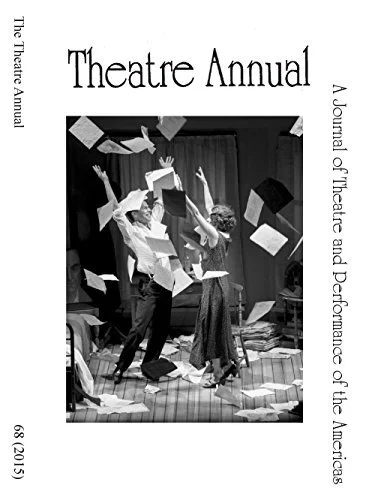
Theatre Annual
Deadline: March 15, 2026
THEATRE ANNUAL
A Journal of Theatre and Performance of the Americas
Call for Articles, 2026 Issue
Theatre Annual is the oldest theatre periodical continuously published in the United States. It is dedicated to examiningtheatre and performance of the Americas. We construe “America” broadly to include North, Central, and South America and the Caribbean Islands. Articles may treat work in these geographic areas or work from these areas that is presented elsewhere in the world. We welcome articles on the history and ethnography of performance, drawing from such areas as theatre studies, performance studies, popular culture, music, anthropology, dance, communication, philosophy, folklore, history, and areas of interest that cross disciplinary lines.
Submissions should follow the guidelines in The Chicago Manual of Style, 17th edition (endnotes, no Works Cited list). Authors should submit articles as Word attachments to the editor, Dr. Jonathan Shandell (shandelj@arcadia.edu). In order to assist in the anonymous peer review process, the author’s identity should not be revealed in the manuscript except on a separate title page that should also include full contact information (academic affiliation, mailing address, home, cell, and work telephone numbers, and email address). Articles should be 5,000 to 6,500 words long including notes. Illustrations are highly desirable; authors are responsible for securing rights. Our submission deadline is February 15, 2026. Please allow at least eight weeks after the deadline for a response.
Scholars wishing to write book reviews for Theatre Annual are invited to send an inquiry to the book review editor, Michael Lueger (mlueger@gmail.com). If accepted, reviewers are asked to prepare their manuscripts in conformity with the guidelines in The Chicago Manual of Style without footnotes and submit them as a Word attachment. Reviews should be 750 to 800 words for a review of a single book, 1,000 to 1,200 words for a two-book review, and 2,500 words for a five- or six-book review essay. Submission deadline for book reviews is April 1, 2026. If publishers would like to send review copies, they should contact the book review editor via email to make arrangements.
Theatre Annual, founded in 1942 by the Theatre Library Association, is now published in the fall of each year by The College of William and Mary in Virginia, in association with the American Theatre and Drama Society. For more information on TA, see http://theatreannual.atds.org/

Philadelphia Theatre Research Symposium 2026
Philadelphia Theatre Research Symposium 2026
The Work That Sustains Us: Theatre & the Environment
Tuesday, May 5, 2025
The Philadelphia Theatre Research Symposium (PTRS) is seeking abstracts for the 2026 gathering of theatre scholars and practitioners. We invite proposals for panels and roundtables for our in-person conference at Villanova University this May. This year’s theme revolves around the connections between theatre and environmental sustainability. In 2024, Extinction Rebellion interrupted a performance of Henrik Ibsen’s An Enemy of the People on Broadway with the message that there can be “no theatre on a dead planet.” What is the theatre’s role in environmental sustainability? How has theatre and performance responded to climate change? What methods has the theatre industry used to provoke thought about this important topic, and how has it modeled change?
This year’s keynote is Pulitzer Prize-finalist Lisa D’Amour, whose work has often focused on the theatre’s role in both social and physical environments. Her 2011 performance installation How to Build A Forest, co-created by Katie Pearl, was both a response to the deforestation caused by Hurricane Sandy and a look at how the physical materiality of theatre-making interacts with the environment.
We invite proposals for individual papers or roundtables on topics that could include, but are not limited to:
Environmental activism through theatre
Examples of “going green” in various parts of the theatre industry
Historic examples of sustainable practice
Minimalism and sustainability in design
Pedagogical tools for incorporating environmentalism into theatre classrooms
Plays or performances about climate change and sustainability
Putting live nature on stage
Site-specific theatre
Sustainable practices in theatre technology and theatre management
How to Submit:
Please submit a 250-word abstract for a 15-minute presentation to Bess Rowen at bess.rowen@villanova.edu along with a 100-word biography, including your current affiliation, by Sunday, March 15, 2026, at 11:59pm. Please also include: the paper’s title, the presenter’s name, affiliation, and e-mail address.
About Lisa D’Amour:
Lisa D’Amour is a playwright, educator, and interdisciplinary artist from New Orleans. She received her MFA in Playwriting from the University of Texas at Austin and is the current Distinguished Professor in Playwrighting at the University of Houston. Her theater company PearlDamour creates interdisciplinary, often site-specific works. Recent work includes Ocean Filibuster, a genre-crashing human-ocean showdown, MILTON, a performance and community engagement experiment rooted in five U.S. towns named Milton, and How to Build a Forest, an eight-hour performance installation. D’Amour’s plays have been produced across the country. Notable locations include Manhattan Theater Club’s Samuel J. Friedman Theater on Broadway, Steppenwolf Theater in Chicago, Children’s Theater Company in Minneapolis, Woolly Mammoth Theater in D.C., and ArtSpot Productions in New Orleans. Her play Detroit was a finalist for the 2011 Pulitzer Prize and the 2011 Susan Smith Blackburn Prize. D’Amour is the recipient of the 2008 Alpert Award for the Arts in Theater, the 2011 Steinberg Playwright Award, and a 2013 Doris Duke Performing Artist Award. She currently resides in her hometown of New Orleans.
About PTRS:
The goal of PTRS is to provide a forum for theatre scholars and practitioners to share their research and work in order to enter into a dialogue about current trends in theatrical practice and scholarship. Additionally, PTRS seeks to provide a platform for the works of emerging theatre scholars. Panels will consist of paper presentations of 15-20 minutes and will be moderated by a scholar and/or practitioner.
About VUTD:
The Villanova University Theatre Department aims to inform and inspire theatre artists, administrators, and scholars who will impact the future of this dynamic art form. Our culture of creativity engages in rigorous study and the practical application of theatrical theories and techniques. We believe art has the power to transform hearts and minds by challenging both individuals and communities.
JADT Call for Co-Editors
Call for Co-Editors: Journal of American Drama and Theatre
The Journal of American Drama and Theatre (JADT) seeks applications for an incoming editorial team for a three-year term (Fall 2026- Fall 2029). JADT operates on a model of co-editorship. Co-Editors are expected to communicate duties and share the journal responsibilities. JADT has two dedicated graduate assistants assigned to the journal through the CUNY Graduate Center Theatre and Performance program. Graduate students assist with copyediting and uploading each journal issue on the Open Access website. The start date for the new Co-Editors will be July 1, 2026.
Aims and Scope of Journal:
Founded in 1989, JADT is a widely acclaimed peer-reviewed journal publishing thoughtful and innovative work by leading scholars on theatre, drama, and performance in the Americas—past and present. The journal’s provocative articles provide valuable insight and information on the heritage of American theatre, as well as its continuing contribution to world literature and the performing arts. JADT is fully online and freely accessible. Our aim is to promote research on theatre of the Americas and to encourage historical and theoretical approaches to plays, playwrights, performances, and popular theatre traditions. Studies of dramatic texts from a purely literary perspective are outside the scope of the journal.
Overview of Editorial Duties:
Co-Editors will serve a 3-year term (2026-2029). The first year they will shadow the current editorial team. Their third year will include training the new editorial team.
Co-Editors will shadow current JADT co-editors (Benjamin Gillespie and Bess Rowen) on the Fall 2026 issue and then be responsible for Fall 2027 and Fall 2028 issues
JADT is published twice a year, with one general issue in the Fall and one special issue in the Spring edited by Special Issue Editors
For the Fall issue, the JADT Co-Editors will curate articles, interviews, and roundtables, alongside 4-5 book reviews curated by our Book Review Editor (Stephanie Lim) and 4-5 performance reviews curated by our Performance Review Editor (Jennifer Thompson). Over the past two years, we have also published “New England Theatre in Review” as a special section of performance reviews (edited by Martha S. LoMonoco, previously published by the now defunct New England Theatre Review)
Each Fall issue includes 3-4 articles between 5,000-9,000 words. Co-Editors are responsible for crafting calls for papers, vetting submissions, and matching any potential articles with appropriate peer reviewers. Once articles are accepted, Co-Editors work closely with authors as they revise their work and ready it for publication, sharing feedback on both the macro (structure and theme) and micro (grammar and copyediting) levels. Co-Editors also serve as an extra set of copyeditors on every item in the Fall issue, particularly so they can write a thorough Editorial Introduction. Co-Editors are also able to commission additional interviews and roundtables, which do not require peer review.
Each Spring, JADT publishes a special issue in collaboration with the American Theatre & Drama Society (ATDS) with its own Special Issue Editors. The JADT Co-Editors will serve as advisors to the Special Issue Editor(s), but are not responsible for editing the Spring issue.
JADT is an online-only open access journal run through the Martin E. Segal Theatre Center’s website. Co-Editors will work closely with the Segal Center’s Website Manager to ensure that articles appear correctly on the website. No previous web design or programming experience required, basic training will be provided.
Application Process:
Please submit a 1-page cover letter detailing your interest in this opportunity along with a current CV to Benjamin Gillespie (benjamin.a.gillespie@gmail.com) and Bess Rowen (bess.rowen@gmail.com) by Sunday, March 15th.

CfP: ATDS at ATHE
ATDS at ATHE 2026
AFTER COLLABORATION: IMAGINATION BEYOND CONSENSUS
The call for ATHE 2026 in Baltimore, MD, prompts us to activate imagination in and with community; who are we engaging, how do we safely and effectively collaborate, and what are the limits of our cooperation? How do we create, mentor, teach, build, and dream when “community” itself is a fragile or even impossible site of belonging? Theatre, Dance, and Performance Studies often position collaboration as an idealized act of democratic virtue — a promise, or a dream, or possibly an act of faith that shared labor produces a shared sense of purpose. Yet the past several years make clear that any such faith is strained to the breaking point: coarse public discourse, increasingly normalized violence against marginalized communities, and deep ideological divisions born from a hyper-partisan media challenge our ability to teach and create works that address or overcome political repression and institutional instability. What lies after collaboration—after faith in shared ground collapses?
Proposals might address:
● Ways of collaborating when care cannot be assumed and/or ethically sharing labor in creative or scholastic practices when that labor demands unequal risk;
● Distinguishing between collaboration and complicity in higher education institutions, performance spaces, and organizations that demand civility over justice; ● Negotiating the tensions between control, accountability, and repair amidst an industry insistence to “stay in the room,” even when the room itself (people or institution) enacts harm;
● Historical or contemporary case studies of fractured artistic partnerships, collectives, or institutions that worked together through difference;
● Practicing self-advocacy when distributive authorship covers over extractive or harmful practices, or when rhetorics of cooperation mask radical asymmetries of power;
● Refusal, silence, or non-cooperation as generative forms of dramaturgical or political agency;
● New ways of collaborating and organizing that emerge as a result of conflict, failed collaborations, and crisis;
● The role of imagination in survival—how to generate and then sustain creative and intellectual work amid conflict.
In the spirit of building better communities and collaboration in our fields, ATDS enthusiastically welcomes creative approaches to submissions for panels, roundtables, performance-based presentations, and interactive workshops. This year, we are particularly eager to collaborate with other Focus Groups, and we encourage you to imagine, dream, and create across organizational divisions in ATHE.
Submission Guidelines: The Pheedloop submission portal for the 2026 Summer Conference will open on November 3, 2025. For consideration, please submit a short abstract of 250-300 words and the personal information requested in the ATHE portal by December 12, 2025 (11:59 p.m. Eastern). As in recent years, ATHE will hold a second round of submissions (due March 9, 2026) for additional participants to accepted sessions. The submission portal will be available through ATHE’s website. For a complete timeline of this year’s conference submission activities, please visit ATHE 2026’s Important Deadlines page and the Conference FAQs page. If you have questions, please contact co-conference planners Samuel Yates and Victoria LaFave at conference1@atds.org.
Call for Nominations: ATDS Co-Conference Planner
ATDS Call for Nominations - Co-Conference Planner
ATDS is holding an election in 2026 for the following position:
Co-Conference Planner: The term of office for the co-conference planner is two (2) years. During the first year, the newly elected co-conference planner will work with the current conference planner. During the second year, the elected conference planner will work with the newly-elected associate conference planner.
The Co-Conference Planner’s term will begin following the annual ATDS meeting at the 2026 Association for Theatre in Higher Education conference. You can find information about the Co-Conference position in Article 5, section 13 of the organizational bylaws, available on the ATDS website (https://www.atds.org/bylaws).
Open Nominations
Nominations are open until February 15, 2026. You may nominate yourself or others. In accordance with the bylaws, the ATDS Nominating Committee will prepare a slate of candidates. Nominees will be contacted by the Nominating Committee and must confirm their willingness to serve prior to finalization of the election slate. The election will be held the last week of February via anonymous online polling and will be open to all ATDS members.
Please send nominations and self-nominations to atds2026nominatingcommittee@gmail.com.
ATDS is committed to growing our programming centered on anti-racist efforts as well as professionalization workshops and seminars for our members and we welcome nominations of scholars at all stages of their careers. Keep in mind that ATDS is currently offering pay-what-you-can membership, which can be found here. The committee especially encourages nominations of BIPOC scholars and artists who work in and/or on theatre of the Americas.
Please send questions and concerns to atds2026nominatingcommittee@gmail.com.
Thank you,
Jocelyn L. Buckner, Heidi Nees, Bryan M. Vandevender
ATDS Nominating Committee
“Staying Put,” a special issue of Theatre Journal (articles)
Theatre Journal Special Issue for December 2026
For this special issue on “Staying Put,” Theatre Journal invites submissions that engage with “staying put” as a conceptual framework and/or as a foundational aspect of theatre, dance, and performance studies scholarship. This theme is inspired by the resilience performance groups have historically exhibited—and continue to exhibit—in response to challenges such as the pressures of the COVID-19 pandemic, rising rents, lack of funding, and political instability. Many practitioners and companies have resisted displacement, remaining in the spaces where they cultivate their craft, generate new artistic possibilities, and engage with their communities. A notable example is Su Teatro in Denver, Colorado. By mobilizing community support, in 2024 the Latine theatre company successfully paid off its mortgage and even expanded its space in the face of rapid gentrification. In cases such as this, the act of staying put not only ensures the continued presence of the embodied arts in a given locality but also asserts social and cultural significance. Given the increasing presence of conservative discourses across the globe, that any company or artistic collective chooses to stay put is a political and radical act. By choosing to remain, preserving physical and artistic footholds, groups and practitioners reinforce the vital role of the arts in the community.
At the same time, “staying put” invites expansive interpretation, encompassing both durational and ephemeral interventions as strategies of resistance and refusal. Protest actions such as sit-ins, die-ins, and teach-ins exemplify how physical presence can operate as a performative tactic— disrupting dominant narratives and drawing attention to urgent sociopolitical issues. Beyond overt protest, performance artists, dancers, and theatremakers have long explored the concept of staying put through site-specific works, endurance-based practices, and installations that reclaim or reimagine contested spaces. Performances foregrounding slowness, stillness, or repetition often function as aesthetic and political acts of persistence, challenging systems that valorize mobility, speed, and displacement.
“Staying put” also evokes ideas of rootedness or plantedness, inviting reflection on nonhuman agents and their relationship to place and acts of resistance. Additionally, archival and dramaturgical interventions, along with performance practices grounded in ghostly or reenactment-based encounters, offer alternative ways of “staying put”—resurrecting marginalized histories, reclaiming cultural memory, and insisting on the presence of voices that institutions or dominant discourses have attempted to erase. Ultimately, “staying put” invites us to consider what it means to perform remains: to examine the who, what, and where of remaining.
Overarching questions of this special issue include: How does the act of “staying put” function as a form of artistic and political resistance in the face of displacement, gentrification, or systemic oppression? In what ways does “staying put” challenge dominant notions of time, movement, and progress in theatre, dance, and performance? How do theatre, dance, and performance groups sustain themselves in contested or precarious spaces?
This special issue will be edited by Theatre Journal Coeditor Christina Baker. We will consider both full-length essays for the print edition (6,000-9,000 words) as well as proposals for short provocations, video and/or photo essays, and other creative, multimedia material for our online platform (500-2,000 words). For information about submission, visit: https://jhuptheatre.org/theatre-journal/author-guidelines.
Article submissions (6,000-9,000 words) should reach us by February 1, 2026. If this deadline is not possible for you due to extenuating circumstances, please contact Christina Baker to inquire about a possible extension. She welcomes questions and inquiries at christina.baker0001@temple.edu.
The deadline for submissions to the online platform (500-2,000 words) is June 1, 2026. Online Editor Tarryn Chun welcomes questions and inquiries regarding submissions to the online platform at tchun@nd.edu.
Submit via ScholarOne: https://mc.manuscriptcentral.com/theatrejournal.
ATDS at CDC Panels
From Rick Gilbert:
Hello all! Once again, I am looking for papers for the Comparative Drama Conference! It is a really collegial, focused conference that alternates between London and Madison, WI.
Here is the CFP for the ATDS panels:
Special Call for Prearranged American Theatre and Drama Society (ATDS) Panels at the Comparative Drama Conference (CDC), Madison, Wisconsin, July 9-11, 2026
Special extended deadline for these prearranged ATDS panels (only): January 10, 2026
Please note that the regular CDC conference deadline is December 15, 2025. In addition to abstracts for papers, CDC also invites proposals for new plays for staged reading at the conference, also due by December 15, 2025. For full details, see the CDC CFP linked here. For general inquiries on the CDC Conference, please contact cdc2026@theatre.wisc.edu]
For this special call for ATDS panels (only) please contact Rick Gilbert (Loyola University Chicago) at rgilbert1@luc.edu.
Panels Sponsored by the American Theatre and Drama Society (ATDS)
The following panels are seeking papers for presentation at the Comparative Drama Conference July 9-11, 2026 at the University of Wisconsin, Madison.
Papers for either panel should be 15 minutes in length, written for oral presentation, and accessible to a multi-disciplinary audience. Scholars and artists in all languages and literatures are invited to email a 250 word abstract in English to Dr. Richard Gilbert (rgilbert1@luc.edu) by January 10, 2026. Please include paper title, author’s name, status (faculty, graduate student, independent scholar), institutional affiliation (if any), and postal address at top left. Anyone who presents on one of these panels should be (or become) a member of the ATDS (https://www.atds.org/) and must register for the CDC conference.
Panel 1: American Political Theater
Companies throughout the Americas have come back from the pandemic to begin producing theater again and while many are reviving old chestnuts or offering escape from the political, some are experimenting with new kinds of political work while others are reviving classic techniques of agit-prop theater. All this despite the fact that American politics have become so farcical that in some ways political theater is more difficult to write and produce than ever.
This panel seeks papers that explore the ways in which contemporary American plays and productions seek to do political work. We are particularly interested in discussions of new plays or of new productions or interpretations of older work.
Panel 2: The State of the Theater in 2026
The theater as an industry and as a community of artists has changed in the last decade in a host of ways. Theater is still struggling to recover the numbers it boasted pre-pandemic, both in terms of number of plays produced and sizes of audiences. Other changes which seemed promised in 2020 regarding representation and accessibility have proven elusive. Much loved institutions struggle or have closed. Yet the theater is still able to surprise us with new companies doing new and exciting work in new venues.
This panel seeks papers that discuss the current state of the theater, either as an industry or a community or a set of practices in boardrooms or rehearsal rooms.
Questions or submissions for the ATDS panels (only) should be directed to rgilbert1@luc.edu
For general CDC Conference Info, please see the 2026 CDC Conference Website: https://theatre.wisc.edu/comparative-drama-conference-cdc/
Hope to see you in Madison!
-Rick
Dr. Richard Gilbert (he/him)
Department of English
Department of Fine and Performing Arts
Loyola University Chicago
ASTR Plenaries and Working Sessions
Proposals for Plenaries and Working Sessions
open January 5, 2026
For ASTR's 70th anniversary, the conference committee invites submissions for plenaries, the state of the professions panel, concurrent panels, and working sessions, seeking perspectives that explore—or take stock of—theatre and performance's protean facets: historical and contemporary, methodologies of research, protocols for making and remembering, and all forms of capital, human and otherwise, that constitute creative effort.
We particularly encourage participants to take stock of performance's abilities to radically and subversively represent individuals and groups marginalized from history—creatively countering their silence, marginalization, and exclusion within the socio-political landscape—and to generate cultural allyship.
Read the full call, including new formats for concurrent panels and "State of the Professions."
New to ASTR? Understand our unique conference format, consisting of plenary papers and working session collaborations. Anyone can propose a plenary or work together with colleagues on a working session rationale!
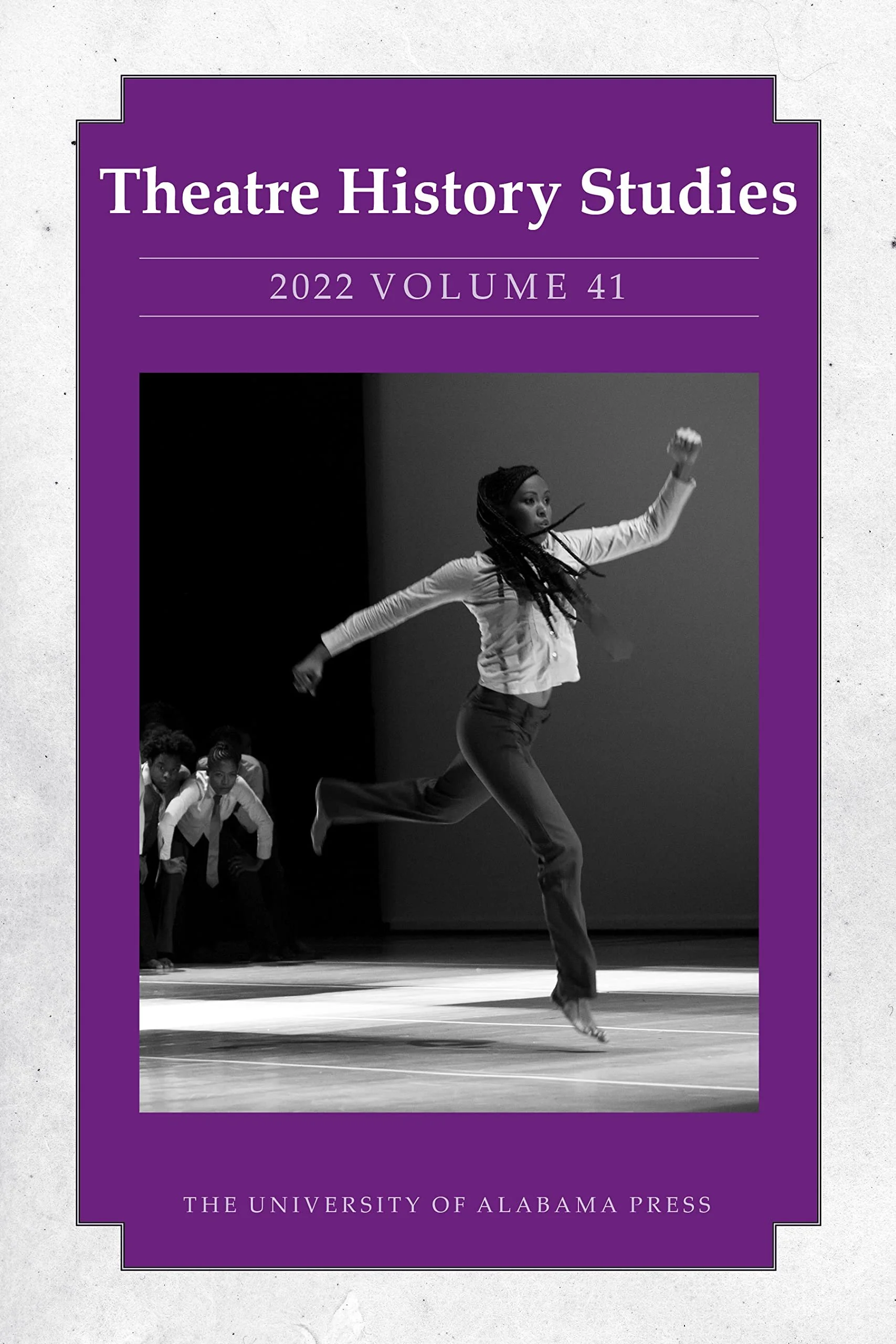
“Embodied Historiographies,” a special section of Theatre History Studies
It all begins with an idea. Maybe you want to launch a business. Maybe you want to turn a hobby into something more. Or maybe you have a creative project to share with the world. Whatever it is, the way you tell your story online can make all the difference.
“Institutionality,” a special issue of Theatre Journal (articles)
It all begins with an idea. Maybe you want to launch a business. Maybe you want to turn a hobby into something more. Or maybe you have a creative project to share with the world. Whatever it is, the way you tell your story online can make all the difference.

IFTR Popular Entertainments WG
DEADLINE EXTENDED
IFTR’s Popular Entertainments Working Group is interested in uncovering and giving voice to historical and contemporary forms of popular performance that have largely been overlooked in dominant theatre history narratives. The multiple performance styles/genres within the group’s field of interest include circus, burlesque, variety, vaudeville, revue, sport as performance, music in popular entertainments, popular theatre, clowns, and comedy. More recently the scope and focus of the group’s work has expanded to consider popular entertainment’s important role in the wider theatre ecology; the influences of the popular on historical avant-garde and contemporary experimental practices have encompassed picture postcards, medicine shows, tamasha, ijele, masquerades, comedy clubs, puppet theatre, digital gaming, and drag, to name a few; to be inclusive of the changing cultural status of popular forms.
For the IFTR conference in 2026, which will take place in Melbourne, Australia from 6-10 July, the Popular Entertainments Working Group wishes to echo the conference’s focus on performance, technique, and efficacy. We seek to engage with the concerns particular to the domain of popular forms and the academic discourse around it. One of the concepts we’re particularly interested in this year is the idea of joy. Joy (laughter/resistance/mischief) informs the efficacy and physical vocabularies of popular entertainments. How can we bring it back into the conversations around popular entertainments and their efficacy? Here are some prompts to help you think through these concerns:
What do popular entertainments achieve and what methods do they use? What constitutes the corporeality of performance in the ‘popular’? What is it doing differently from other forms that may use similar techniques?
What is the intention of popular performances, and what do these achieve for their spectators? How does a form’s technique include its spectators? How do spectators contribute to a form differently in a popular form than in more conventional theatre? How has this efficacy and approach towards it shifted over time?
Does the efficacy of a form change if it moves from “folk” or “popular” to “mass” or “digital” entertainment? How does efficacy differ for broader categories through which we study performance? Does it vary with forms which have both historical and contemporary existence? Is a form’s intended efficacy part of its definition as part of the popular?
What does the study of popular entertainments ‘do’ within the field of theatre and performance studies? In other words, what effect does its study have on how we think about the larger field? What disruptions/interruptions are caused by our presence in academia and scholarly research?
What are the new terminologies that assist you in pushing the concepts, understandings, and workings of the popular, especially with the shift towards posthumanities, digital humanities, and non-binary and multidirectional ways of looking at the world? Do you look for these terminologies beyond the field of performance studies?
Group Meetings
The Popular Entertainments Working Group operates by circulating members’ draft papers in advance of the conference, enabling a more focused discussion. Once papers are circulated, members are then asked to nominate another paper they’d like to moderate. The group allocates approximately twenty minutes for discussion of each paper. Members are asked to speak about their research for ten minutes; visual or AV material that amplifies or supports their paper in some way is encouraged. (As all papers are read in advance, presenters are not required to provide an oral summary of their paper.) A moderator assigned to the paper will then lead the remaining ten minutes of discussion.
Submission of Abstracts
Please specify Popular Entertainments Working Group when submitting your abstract (250-300 words). Accepted participants will be asked to submit full papers (no more than 5000 words) to the convenors in early June for distribution. Papers need not be in a finished state: drafts and works-in-progress are acceptable. Once gathered, all papers will be made available to group members for reading, and a discussant will be allocated to each.
Note the submission timeline
1 November: Abstract submissions open. Abstracts must be submitted to the IFTR conference platform via the IFTR webpage.
15 December: Abstract submissions close.
30 December: Notification of Acceptance
Please note that you have to be a member of the IFTR to submit an abstract. To join or renew your membership, visit the IFTR webpage.
For inquiries about the working group, please contact Aastha Gandhi and Susan Kattwinkel at: iftrpopentertainment@gmail.com
ATDS at ATHE
ATDS at ATHE 2026
AFTER COLLABORATION: IMAGINATION BEYOND CONSENSUS
The call for ATHE 2026 in Baltimore, MD, prompts us to activate imagination in and with community; who are we engaging, how do we safely and effectively collaborate, and what are the limits of our cooperation? How do we create, mentor, teach, build, and dream when “community” itself is a fragile or even impossible site of belonging? Theatre, Dance, and Performance Studies often position collaboration as an idealized act of democratic virtue — a promise, or a dream, or possibly an act of faith that shared labor produces a shared sense of purpose. Yet the past several years make clear that any such faith is strained to the breaking point: coarse public discourse, increasingly normalized violence against marginalized communities, and deep ideological divisions born from a hyper-partisan media challenge our ability to teach and create works that address or overcome political repression and institutional instability. What lies after collaboration—after faith in shared ground collapses?
Proposals might address:
Ways of collaborating when care cannot be assumed and/or ethically sharing labor in creative or scholastic practices when that labor demands unequal risk;
Distinguishing between collaboration and complicity in higher education institutions, performance spaces, and organizations that demand civility over justice;
Negotiating the tensions between control, accountability, and repair amidst an industry insistence to “stay in the room,” even when the room itself (people or institution) enacts harm;
Historical or contemporary case studies of fractured artistic partnerships, collectives, or institutions that worked together through difference;
Practicing self-advocacy when distributive authorship covers over extractive or harmful practices, or when rhetorics of cooperation mask radical asymmetries of power;
Refusal, silence, or non-cooperation as generative forms of dramaturgical or political agency;
New ways of collaborating and organizing that emerge as a result of conflict, failed collaborations, and crisis;
The role of imagination in survival—how to generate and then sustain creative and intellectual work amid conflict.
In the spirit of building better communities and collaboration in our fields, ATDS enthusiastically welcomes creative approaches to submissions for panels, roundtables, performance-based presentations, and interactive workshops. This year, we are particularly eager to collaborate with other Focus Groups, and we encourage you to imagine, dream, and create across organizational divisions in ATHE.
Submission Guidelines: The Pheedloop submission portal for the 2026 Summer Conference will open on November 3, 2025. For consideration, please submit a short abstract of 250-300 words and the personal information requested in the ATHE portal by December 12, 2025 (11:59 p.m. Eastern). As in recent years, ATHE will hold a second round of submissions (due March 9, 2026) for additional participants to accepted sessions. The submission portal will be available through ATHE’s website. For a complete timeline of this year’s conference submission activities, please visit ATHE 2026’s Important Deadlines page and the Conference FAQs page. If you have questions, please contact co-conference planners Samuel Yates and Victoria LaFave at conference1@atds.org.
“100 Years of Du Bois,” a special issue of the Journal of American Drama and Theatre
It all begins with an idea. Maybe you want to launch a business. Maybe you want to turn a hobby into something more. Or maybe you have a creative project to share with the world. Whatever it is, the way you tell your story online can make all the difference.
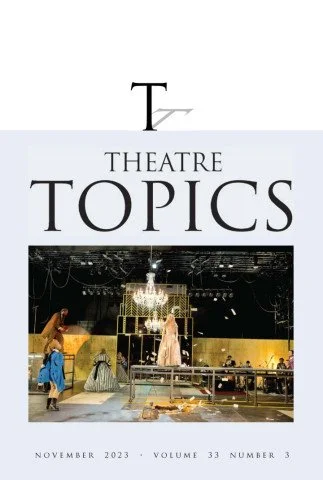
“Theatre in Extremis,” a special issue of Theatre Topics
It all begins with an idea. Maybe you want to launch a business. Maybe you want to turn a hobby into something more. Or maybe you have a creative project to share with the world. Whatever it is, the way you tell your story online can make all the difference.